Rolling services
Brockett provides rolling services for sheet, plate and sections, including cone and segment work, for fabrication and repair jobs shaped in our Germiston workshop.
What Brockett rolls
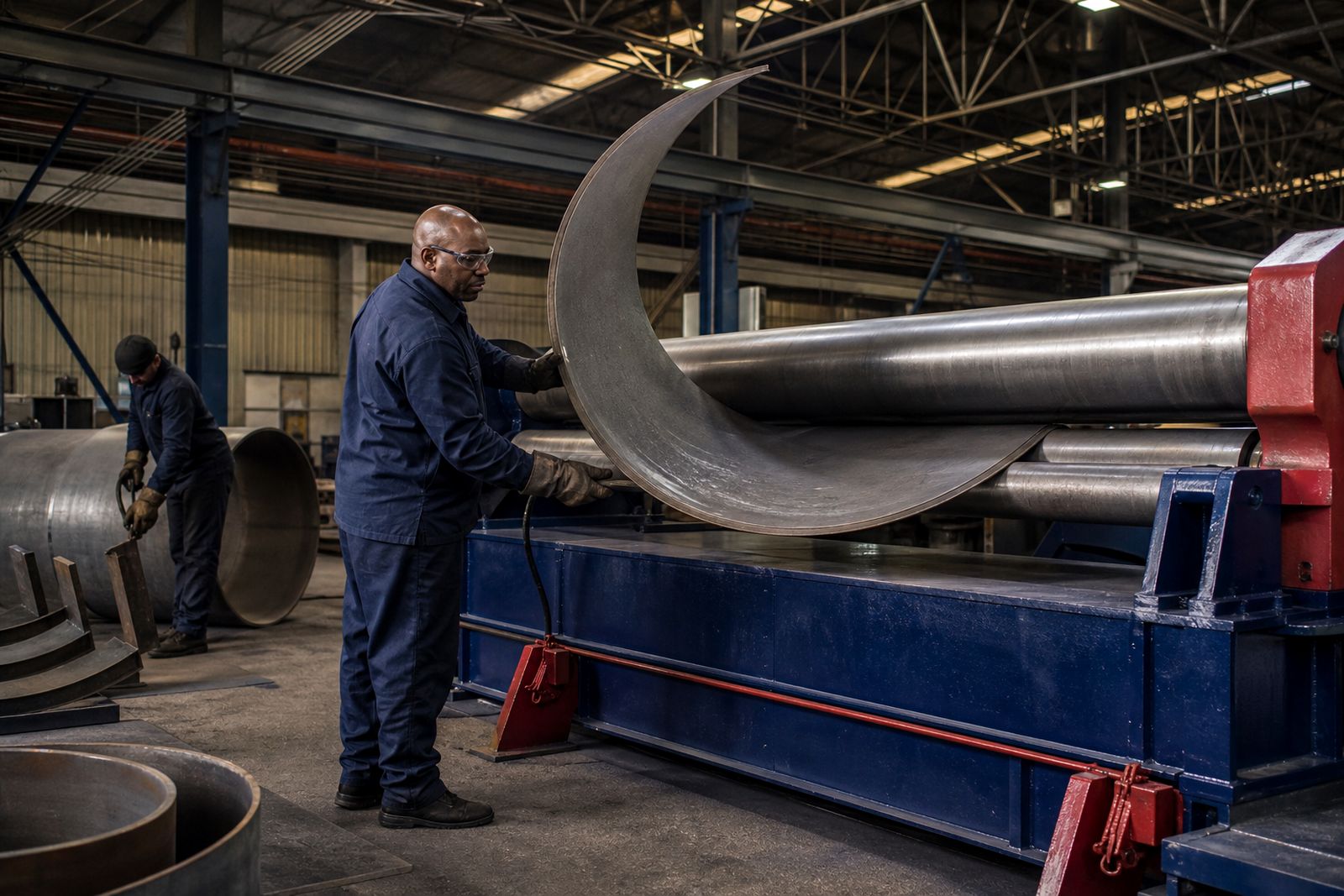
Brockett is a steel rolling workshop that rolls material to size for fabrication and repairs. The work covers sheet, plate and sections, including angle, flat bar, channel, tube and beams, shaped from customer drawings, templates or samples.
These rolling services are used for steel components that need a controlled curve or formed shape before they move into fabrication. Common trade work includes parts for tanks, ducts, structural pieces and related workshop jobs. For more detail on each service, see plate rolling, sheet rolling, section rolling and cone and segment rolling.
Choosing the right rolling service
The starting point is the material form. Plate rolling suits heavier material where strength and radius control matter. Sheet rolling is usually the better fit for lighter material used in formed skins, covers and duct related work. Section rolling is for profiles that need to hold their cross section while being curved.
Cone and segment rolling is used where the part is not a plain cylinder or simple curve. If the job needs a taper, a segment, or formed pieces that join into a larger shape, that service is often the right route. Where the finished part will be used can also help frame the enquiry, especially for tanks and vessels, ducting, structural curves and repairs.
Information that helps us quote
Enquiries come through the contact form. Send the drawing, template or sketch, together with the material details, so the part can be understood clearly enough for a written quote. If something needs checking, Brockett replies with questions before quoting.
- Drawings that show the rolled shape and main dimensions.
- Templates or samples where the existing shape needs to be matched.
- Material details, including what material is being rolled.
- Notes that help identify whether the job is sheet, plate, section, cone or segment work.
If you are preparing a drawing, the notes in drawing a part for rolling and material and thickness can help make the enquiry clearer.
How work moves through the workshop
Brockett rolls, curves and forms steel parts in its own workshop and head office at 2 Makro Place, Sunnyrock 1401, Germiston. The workshop works from customer drawings, templates or samples, shaping the material to the required curve or formed profile.
Customers drop material off and collect finished parts, or arrange their own transport or courier. That keeps the process straightforward for builders, workshops, fabricators and manufacturers who already know how the parts must fit into their own fabrication or repair work.
Related services and next steps
If you already know the type of rolling required, go straight to the service that matches the job. Plate rolling covers heavier curved work, sheet rolling deals with lighter rolled parts, section rolling covers curved profiles, and cone and segment rolling deals with tapered and segmented forms.
For practical guidance before sending an enquiry, see sending us a job and the notes on checking a rolled part. When the details are ready, send them through the contact form and Brockett will reply with questions or a written quote.
Rolling services
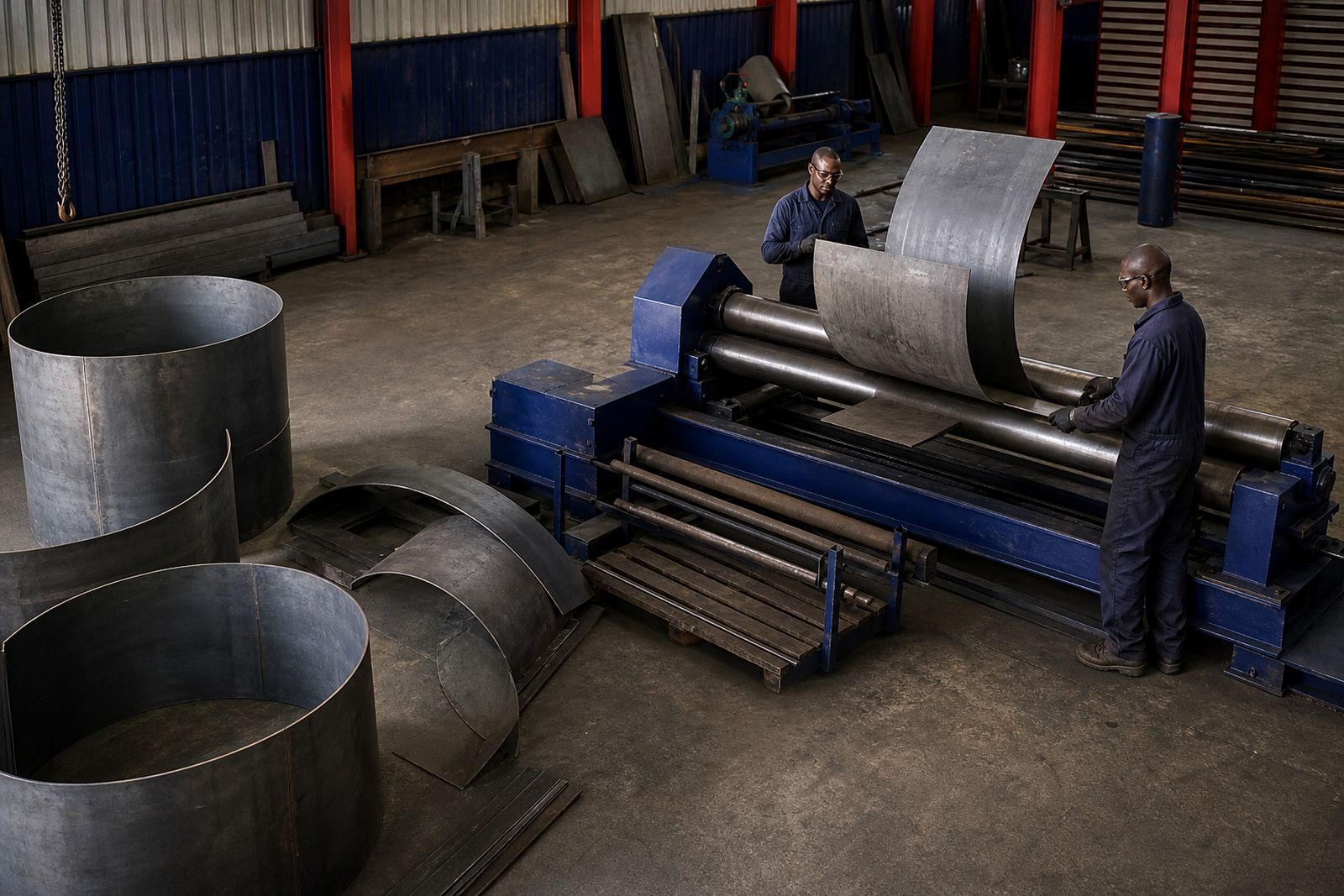
Plate rolling
Steel plate rolling for cylinders, shells and curved parts for tanks, hoppers, repairs and structural fabrication.
Read more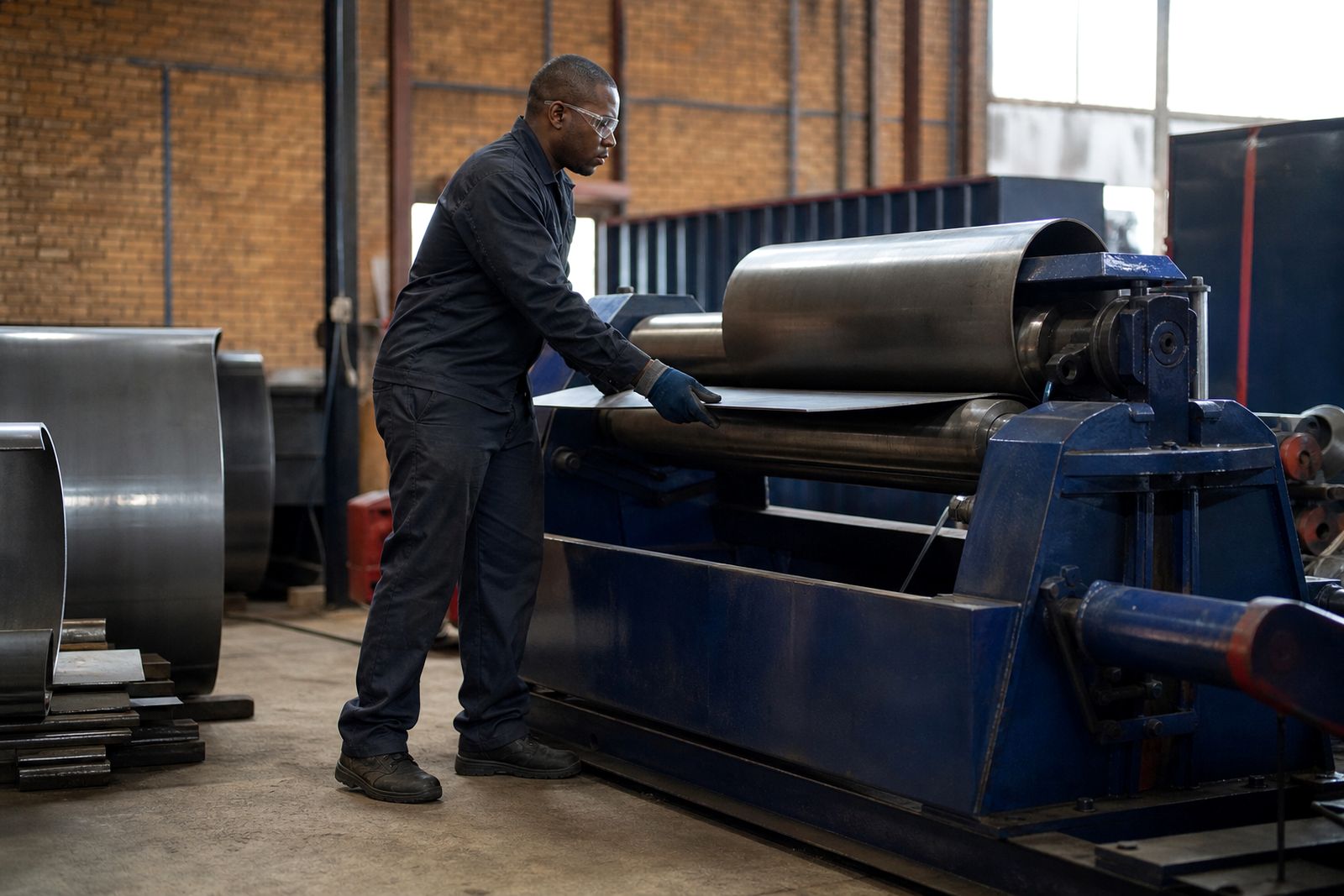
Sheet rolling
Thin sheet rolling for ducts, covers, guards and cladding curves, formed to your drawings or templates in Brockett’s Germiston workshop.
Read more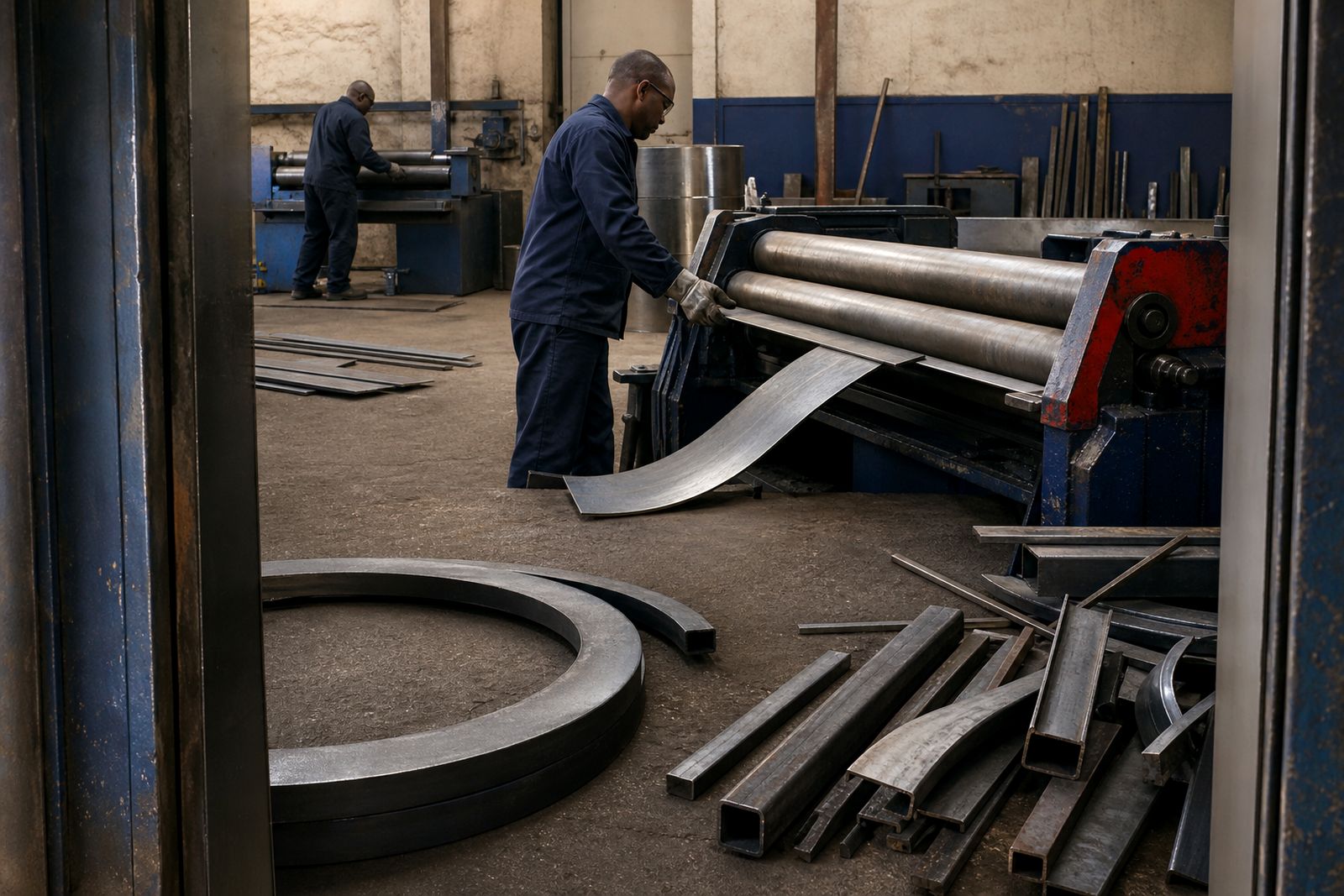
Section rolling
Rolling angle, flat bar, channel, tube and beams to size for curved steel parts and fabricated assemblies.
Read more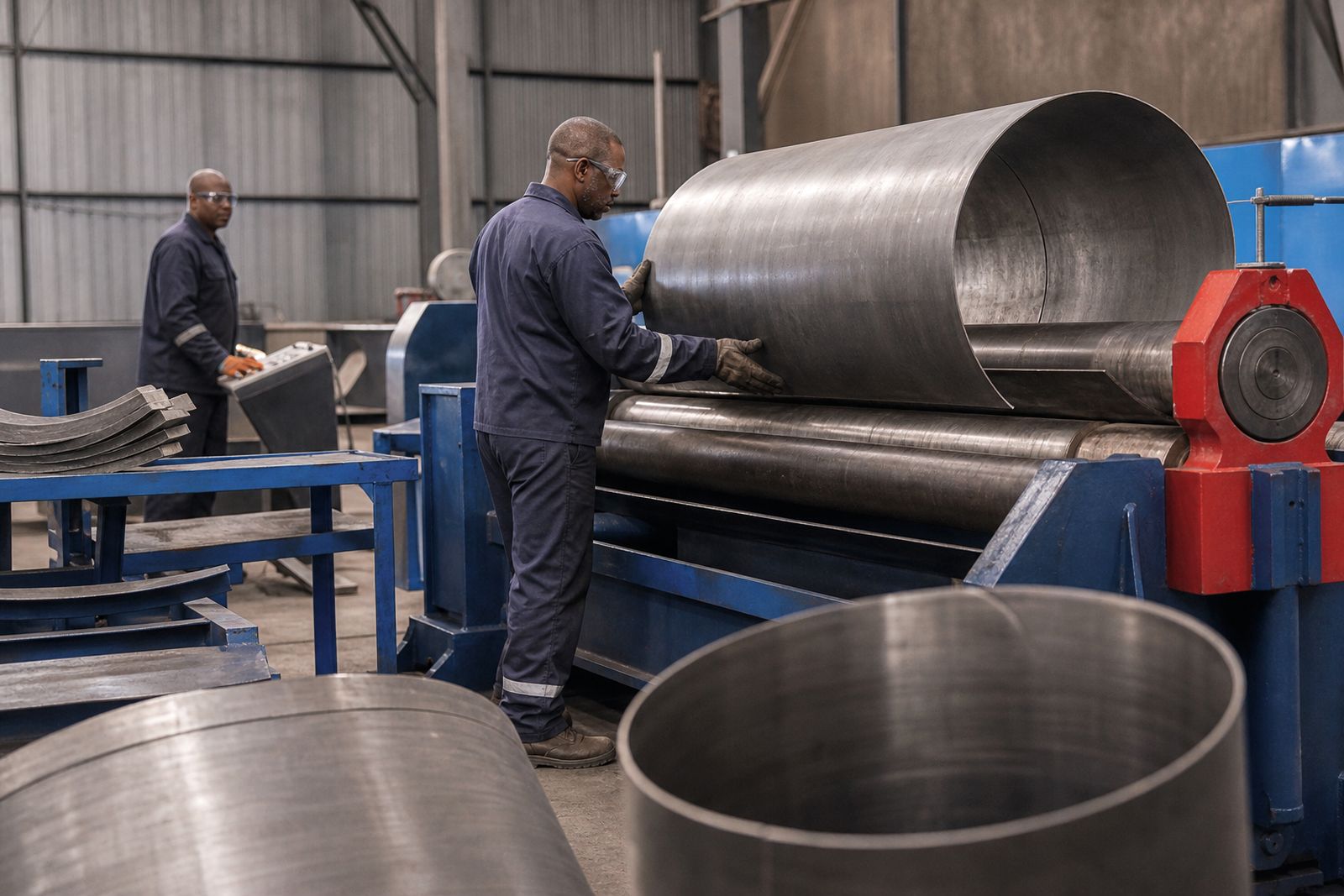
Cone and segment rolling
Cone and segment rolling for hoppers, chutes and duct transitions, made from your flat pattern and material details.
Read moreTell us about the part you need rolled
Send a note through our contact form with your drawing or sketch, the material and thickness, the sizes and quantities, and how the steel will reach our Sunnyrock workshop, and we will come back with questions or a written quote.
Open the contact form