

Shop notes
Practical notes from Brockett for builders, workshops, fabricators and manufacturers preparing steel parts for rolling. Use these guides to send clearer job information and check finished parts properly.
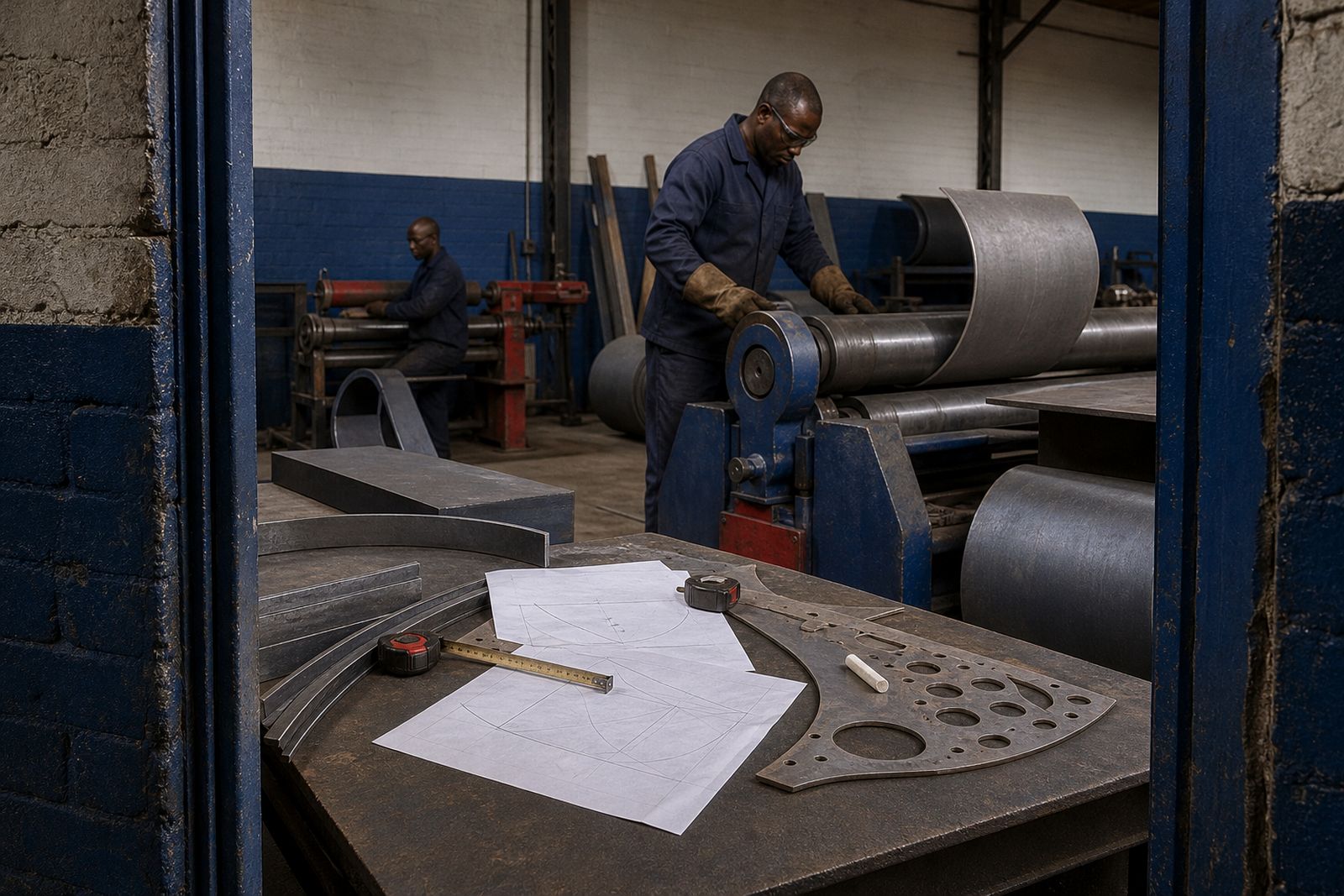
Notes from the workshop floor
Good rolling starts before material reaches the workshop. Clear information helps avoid rework, especially where a part must match other fabricated pieces or fit into existing trade work.
The notes collected here are written for people who prepare jobs for rolling, whether that means a fabricator sending a set of parts, a workshop replacing worn components, or a builder coordinating curved steel for a larger assembly. They focus on the details that matter when sheet, plate and sections are rolled to size.
What these notes help you prepare
Most rolling enquiries come down to a few practical points. The workshop works from drawings, templates, sketches or samples, together with material details, so the more clearly those are set out, the easier it is to review the job properly.
- Part shape, including diameter, radius, arc, chord or any other dimension that defines the curve.
- Material details, including grade where known, and whether the job is in sheet, plate or section.
- Section type, such as angle, flat bar, channel, tube or beams, where section rolling is needed.
- Checking points, so the finished part can be compared against the intended curve before fabrication continues.
Start with the drawing
If you are putting a part on paper, begin with Drawing a part for rolling. It covers the kind of information that helps a rolled shape be understood without guesswork. That matters when a curve has to line up with other parts, close into a round, or sit correctly in a larger fabrication.
Even a simple sketch can help if it shows the right dimensions and orientation. Where a sample or template exists, that can also be sent through the contact form with the rest of the job information.
Material affects the result
Rolled shape is not only about the target size. Material type and thickness influence how a part forms, how tightly it can be worked, and how much it moves after rolling. That is why material information should travel with the enquiry, not be left for later.
For a closer look at those points, read Material, thickness and springback. It is useful when comparing thin sheet to heavier plate, or when preparing section work where the profile itself affects the rolled result.
Check the part before it moves on
Once a part has been rolled, it helps to check it against the drawing, template or intended mating parts before the next fabrication step. Early checking makes it easier to confirm that the curve, roundness or sweep suits the job.
Checking a rolled part gives practical pointers for that stage. If you are still getting the job together, you can also read Sending us a job for guidance on what to include with an enquiry sent through the contact form.
Shop notes
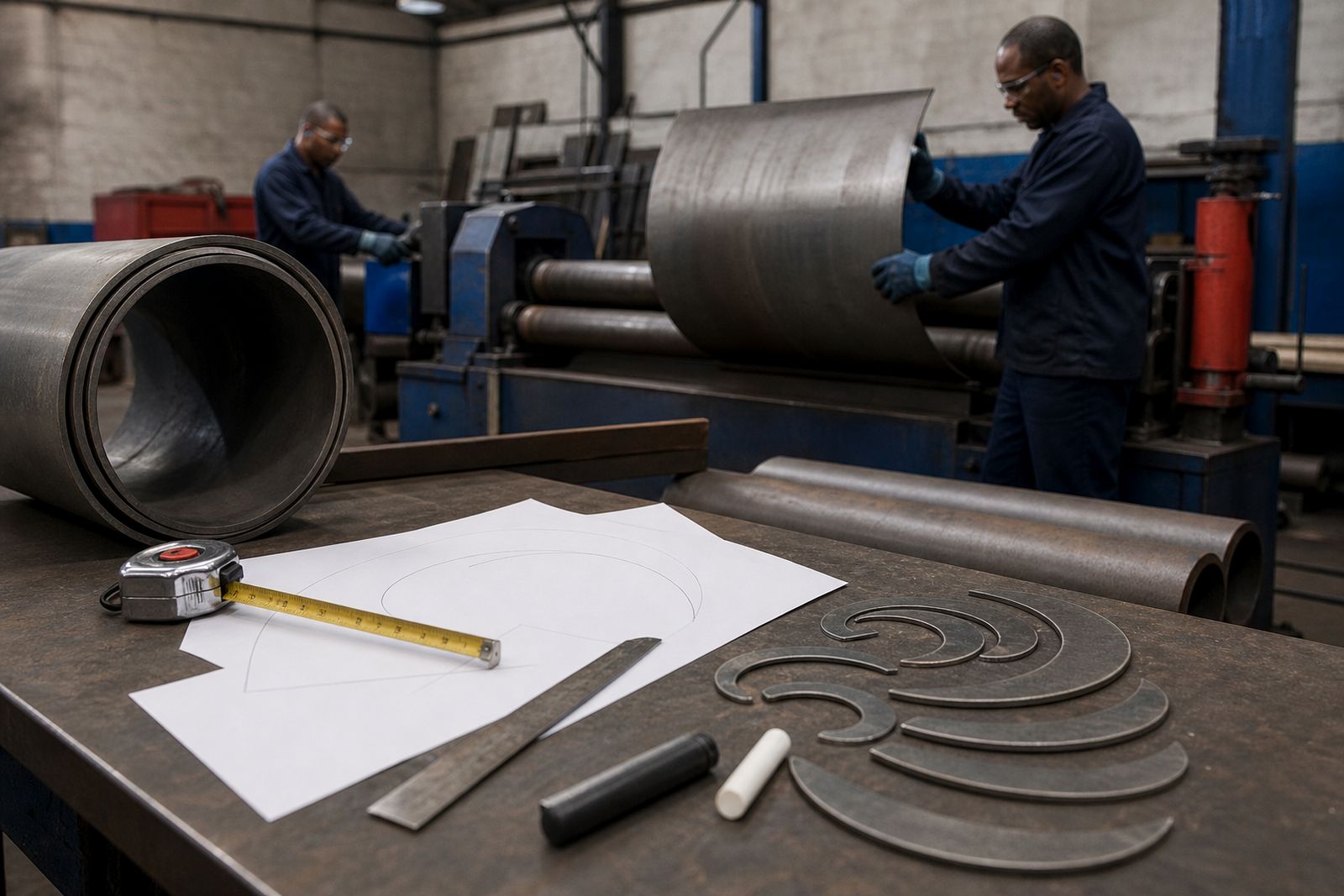
Drawing a part for rolling
How to describe a rolled steel part clearly, with the sizes, faces and checks a workshop needs to quote and roll it.
Read more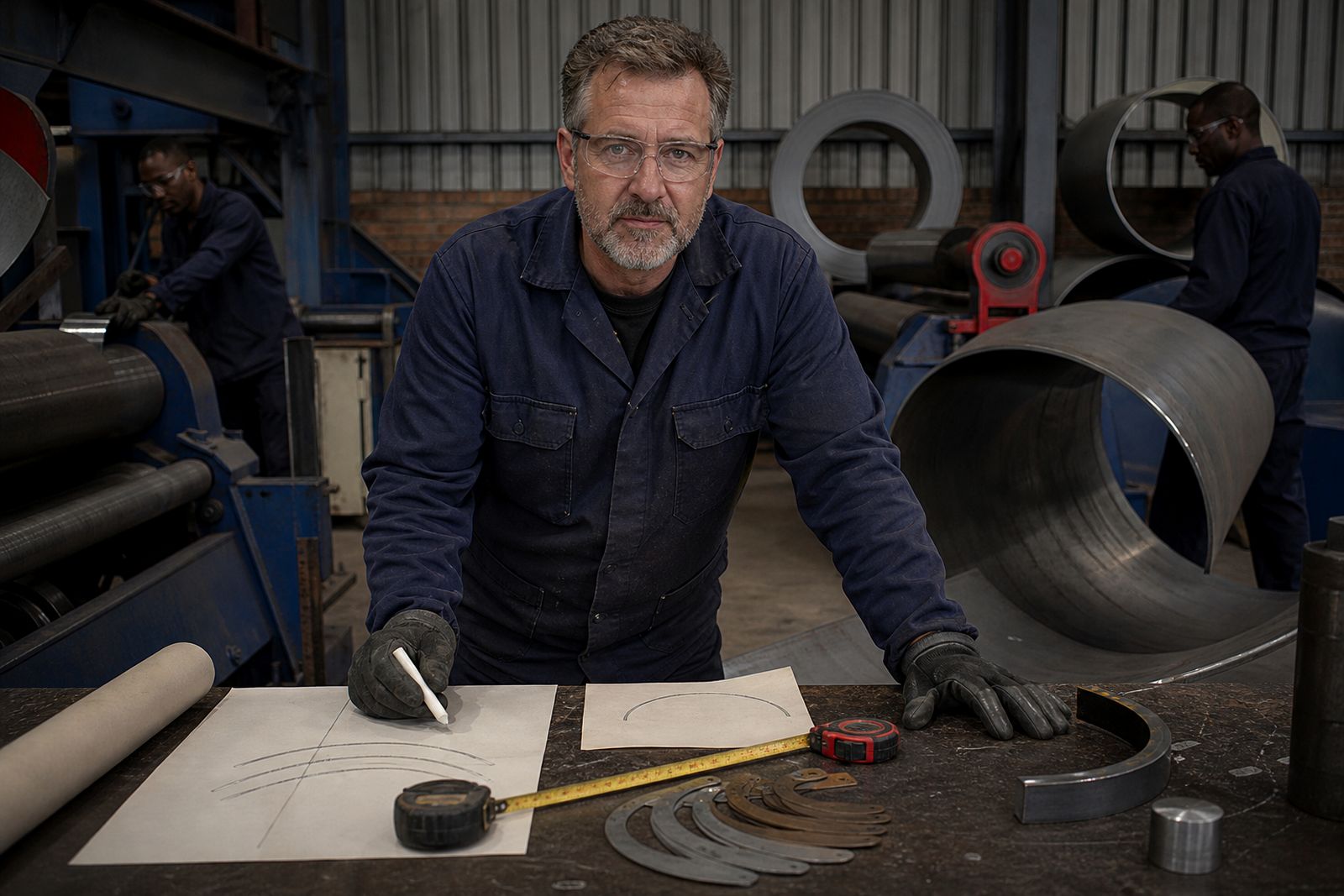
Material, thickness and springback
Grade, thickness and width all affect how steel rolls, springs back and finishes at the ends.
Read more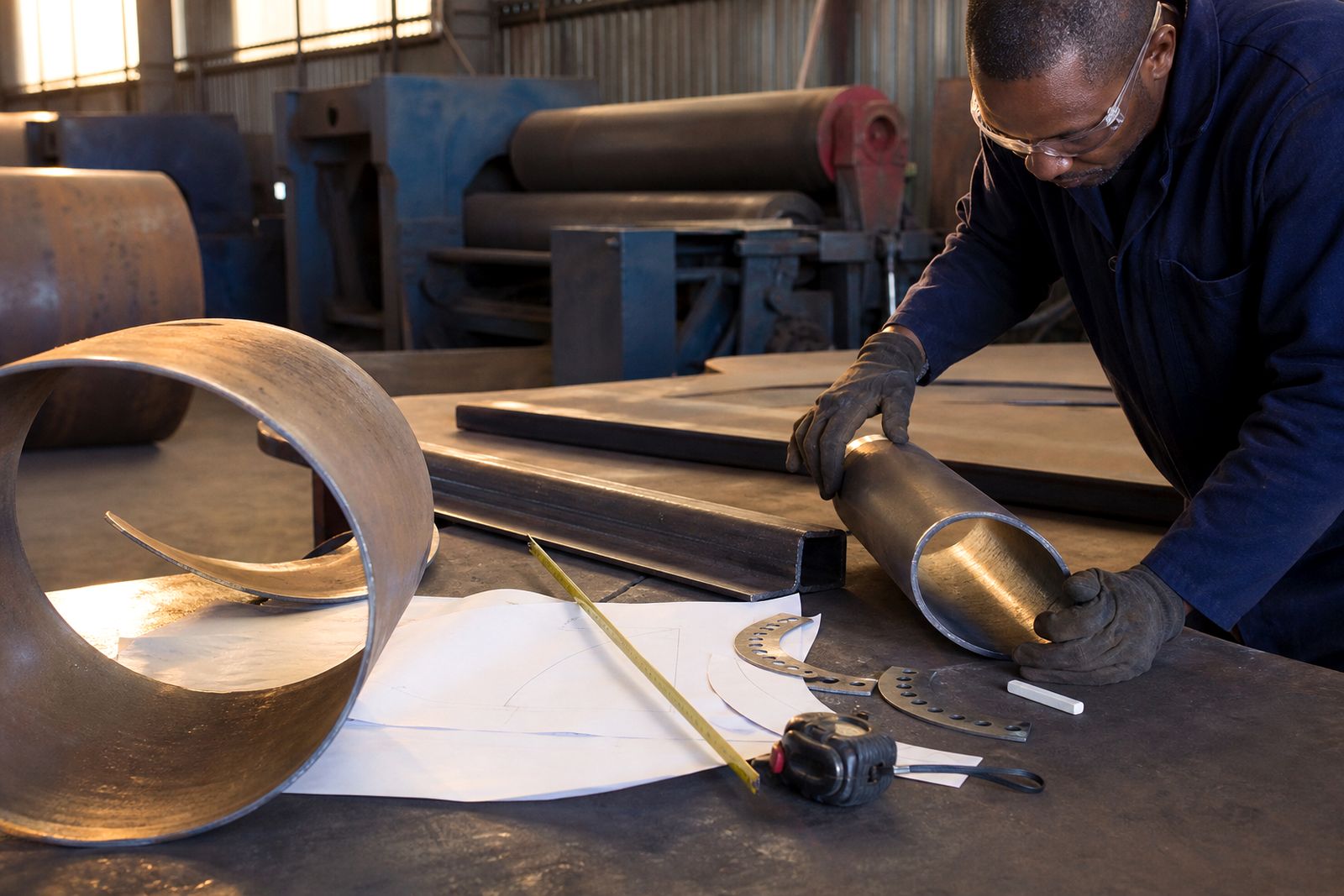
Checking a rolled part
A practical guide to checking rolled parts at collection, from radius and diameter to twist and seam line-up.
Read moreTell us about the part you need rolled
Send a note through our contact form with your drawing or sketch, the material and thickness, the sizes and quantities, and how the steel will reach our Sunnyrock workshop, and we will come back with questions or a written quote.
Open the contact form