
Drawing a part for rolling
A clear drawing or sketch helps a rolling job start on the right basis. Show the curve you need, which face matters, and any sizes that must be checked on the finished part.
Start with the finished shape
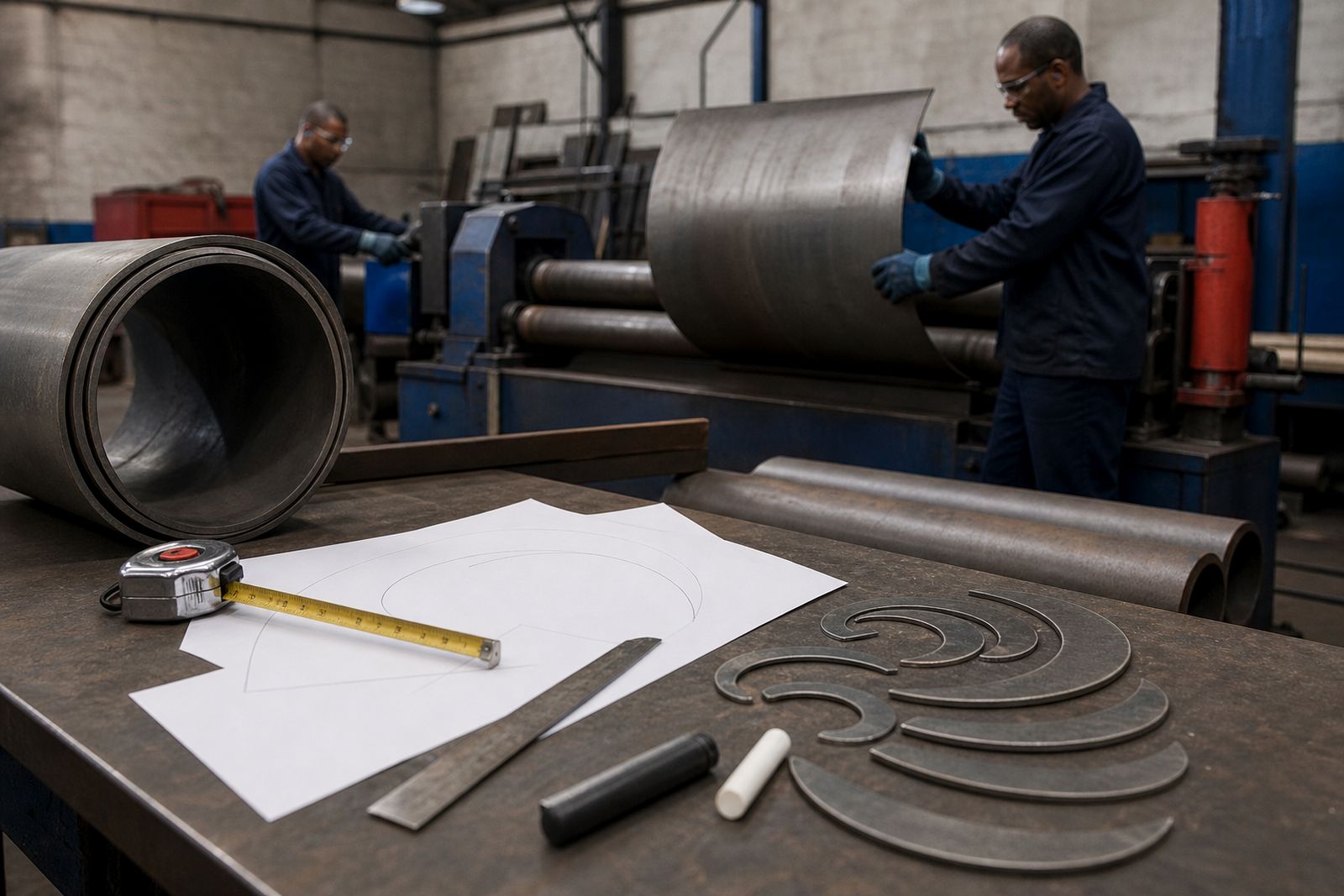
When you send an enquiry through the contact form, the most useful place to start is the finished rolled shape. A workshop needs to see whether the part is meant to be a full ring, a partial arc, a cylinder section, a cone section, or a rolled section such as angle, flat bar, channel, tube or beam. A simple sketch is often enough if the key sizes are marked clearly.
Put the main view first, then add any side or end view that shows orientation. If the part is a segment rather than a full round, show where the curve starts and stops. For sheet rolling, plate rolling and section rolling, the clearer the basic shape is on paper, the easier it is to ask the right follow up questions and prepare a written quote.
State diameter, radius or arc length clearly
Use one main way of defining the curve, and label it properly. If you have an inside diameter, write inside diameter. If you have an outside radius, write outside radius. Do not leave a round number on a sketch without saying what it refers to. A curve can be described in more than one way, so the note beside the dimension matters as much as the number itself.
For partial rolls, arc length is often just as important as radius or diameter. If the part must cover a certain opening or join to other fabricated pieces, mark the developed shape clearly and show where the ends are. If you only know the chord or an overall width across the curve, include that too, but label it so it is not mistaken for arc length.
- Inside diameter, when the inner face matters.
- Outside diameter, when the outer face matters.
- Inside or outside radius, if that is how the part is set out.
- Arc length, for partial sections and segments.
- Full ring or part ring, so the extent of rolling is clear.
Show the flat size and rolling direction
For rolled sheet and plate parts, include the flat size as well as the finished curved shape. Length and width on the flat blank help show what is being formed, especially for duct pieces, tank components and repair sections. If the part is supplied as a flat piece to be curved, mark the flat dimensions on the drawing or sketch you send.
It also helps to show the rolling direction in relation to the flat piece. A quick arrow and a note such as roll this length into the curve removes doubt. If holes, cut-outs, notches or trimmed ends are already present on the blank, sketch their position so the rolled result can be understood properly. This is particularly useful on work related to ducting, tanks and vessels, and repairs.
If the job is a rolled section rather than plate or sheet, the same principle applies. Show the cut length before rolling, then show the target curve on the finished part.
Mark which face is inside
On many rolled parts, one face is more important than the other. The inside face may need to suit a liner, a shell, a frame, or an existing part. The outside face may be the visible side or the side that must line up with other fabricated pieces. Mark this on the drawing with a clear note showing which face is inside after rolling.
This matters on both plate work and sections. With angle, channel, tube, flat bar and beams, orientation changes the finished result. A short note can prevent confusion, such as whether the legs of an angle face inward or outward on the curve, or which side of a channel sits on the inside of the radius. If a curve must match an existing piece, say so and send a sample or template through the contact form if you have one.
Add tolerances and templates where they matter
If a size is critical, mark a tolerance on that size. Not every dimension needs one. In many workshop jobs, one or two check dimensions matter most, such as the inside diameter, the outside radius, or the fit against another curved part. Put tolerances only where they are needed, so the drawing stays readable and the important checks stand out.
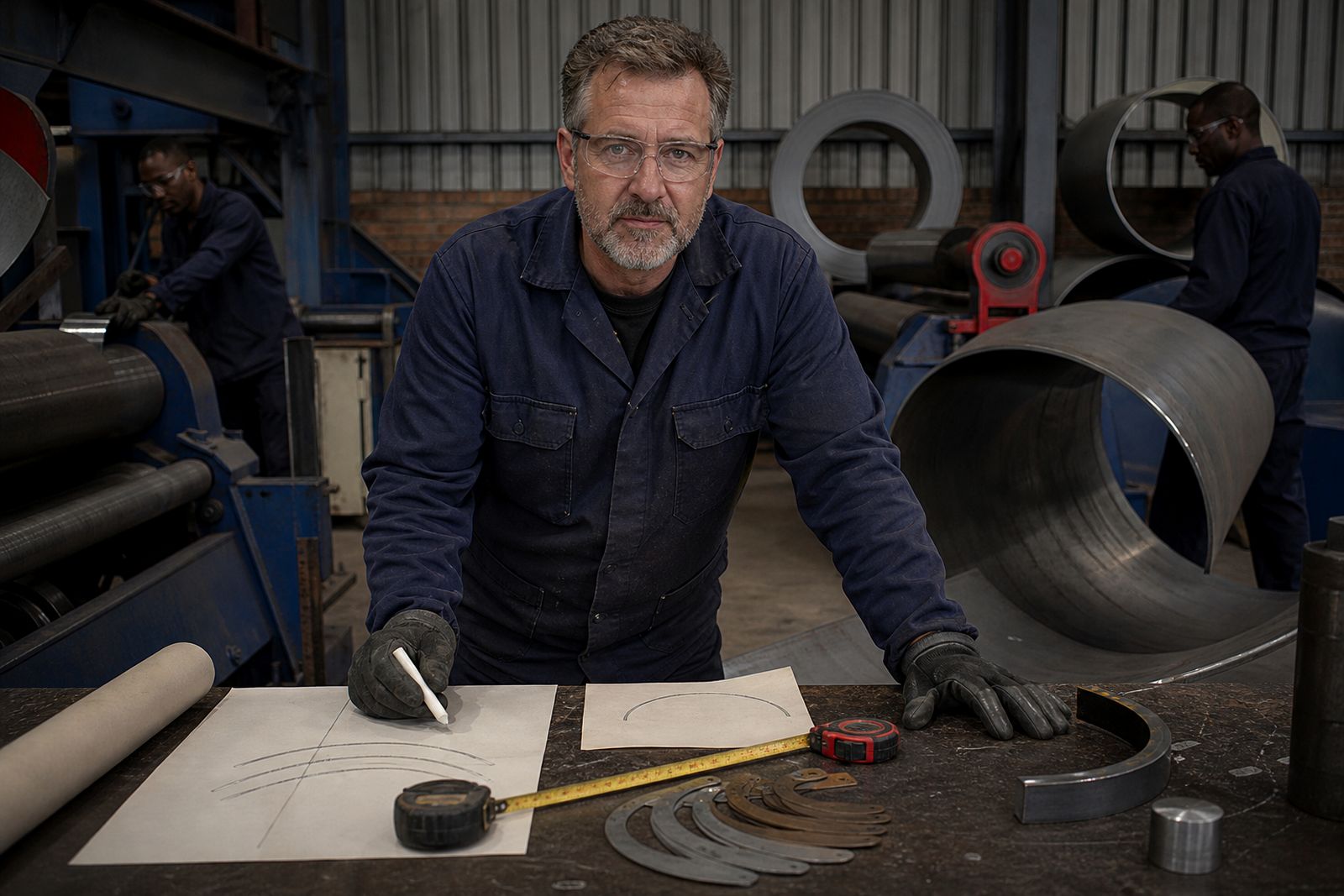
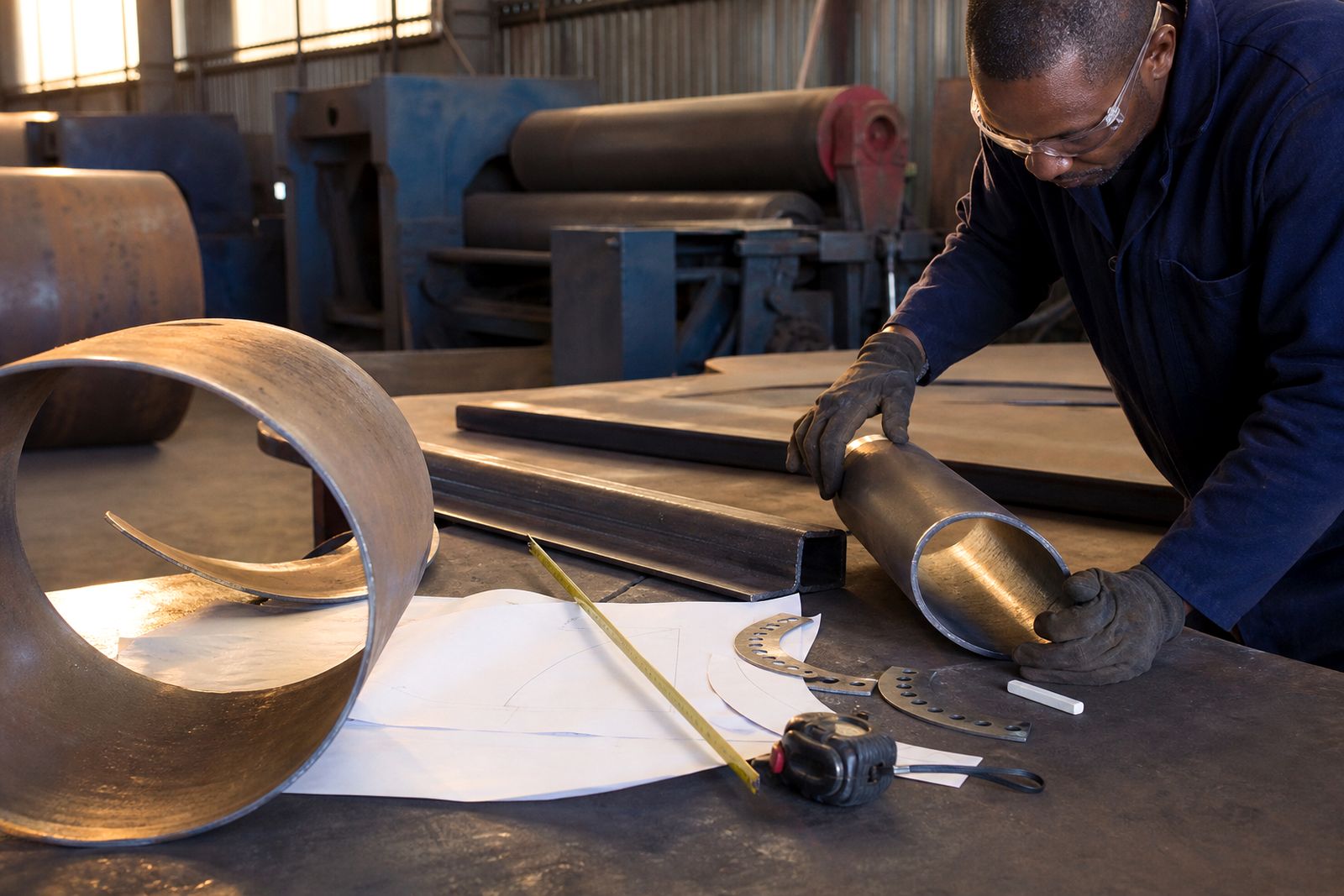
Templates are useful when the curve must match an existing profile. A cardboard, hardboard or steel template can show the intended shape more clearly than a rough sketch alone. If you are sending a template or a sample part, note what it represents, for example inside profile, outside profile, or finished arc. Brockett works from customer drawings, templates or samples in its own workshop in Sunnyrock, Germiston. To send details for quoting, use the contact form. Related notes on material and thickness and checking a rolled part may also help before you send the job through.
Tell us about the part you need rolled
Send a note through our contact form with your drawing or sketch, the material and thickness, the sizes and quantities, and how the steel will reach our Sunnyrock workshop, and we will come back with questions or a written quote.
Open the contact form