Tanks and vessel shells
Brockett rolls sheet and plate for tank and vessel shells made by your own fabricators. Send drawings, sketches or templates through the contact form for a written quote.
Rolled shells for tank fabrication
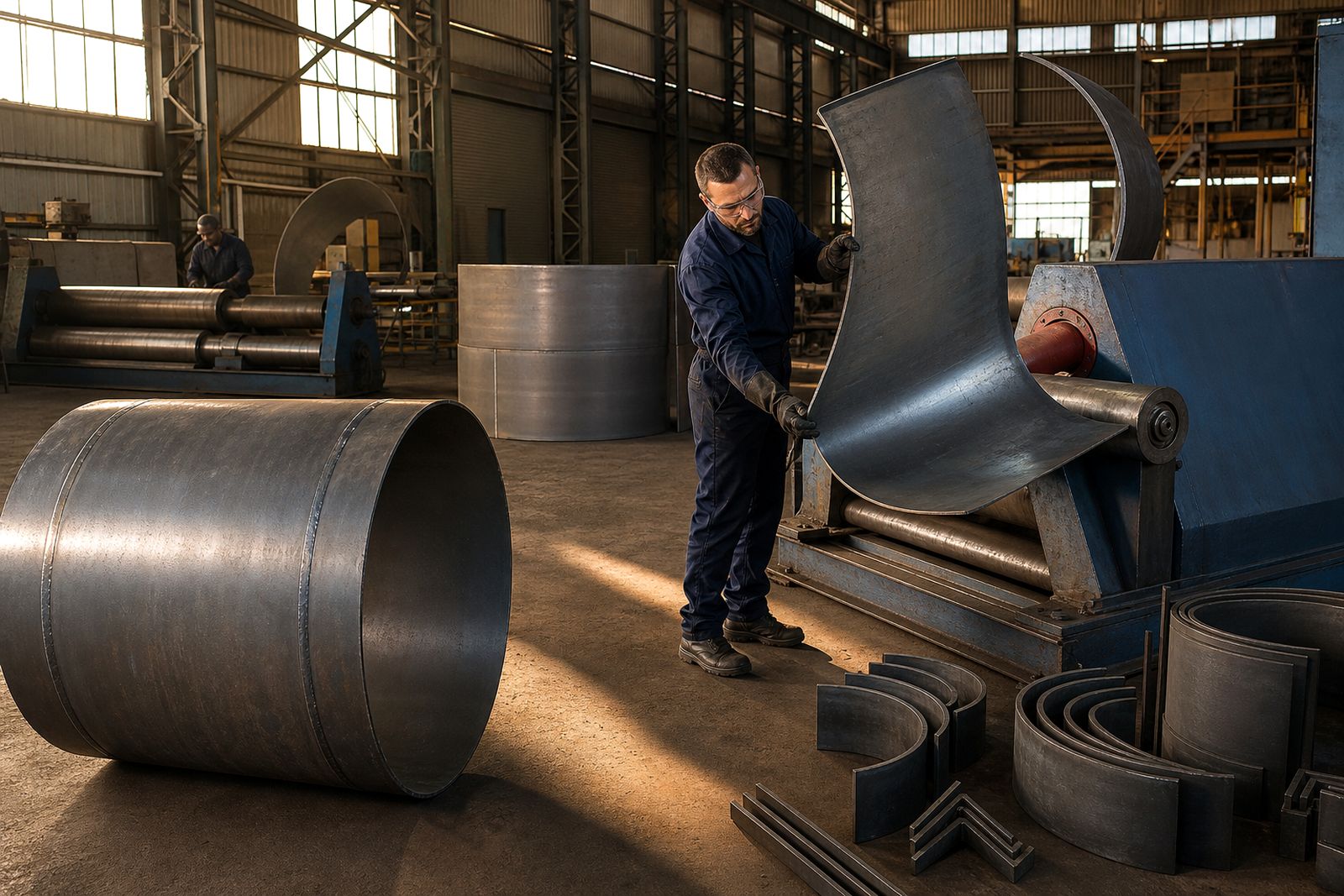
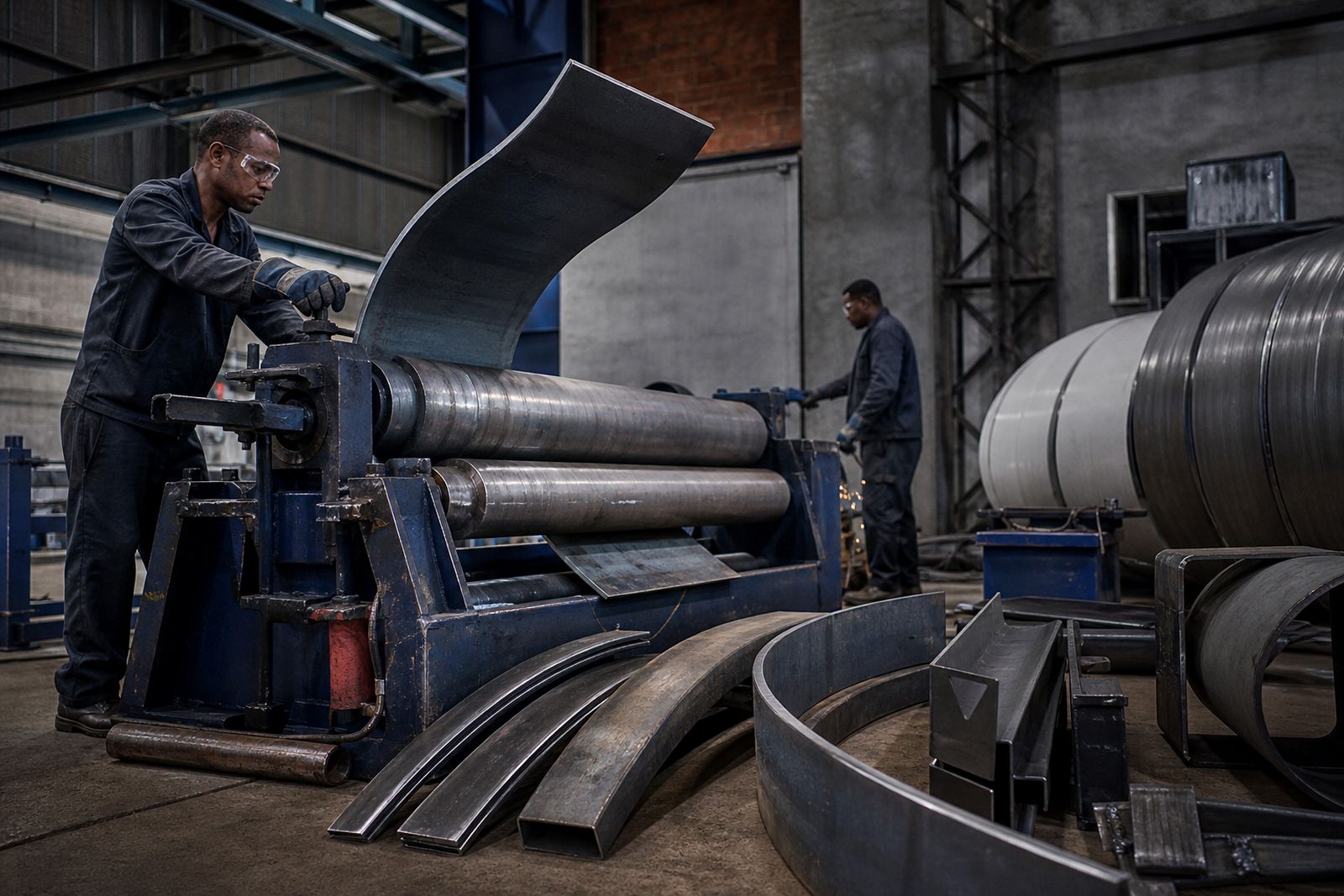
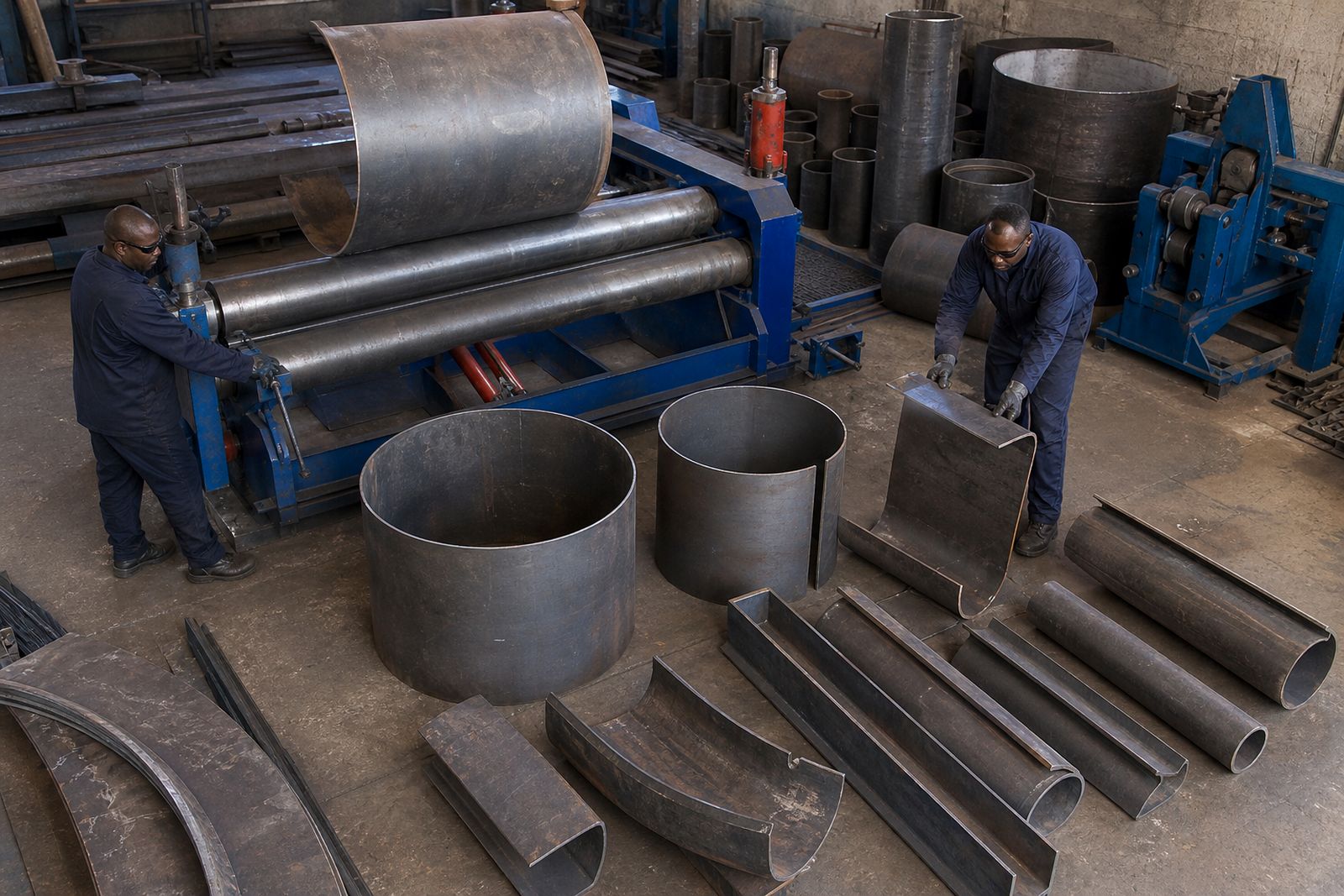
For tank and vessel work, accurate rolling matters long before seams are closed. Brockett rolls sheet and plate to size for shell courses, cans and curved sections that your own fabricators can use for water tanks, process tanks and general vessel fabrication.
Parts are rolled in Brockett's workshop in Sunnyrock, Germiston, from customer drawings, templates or samples. If you have developed dimensions from your own design, send them through the contact form with material details, and Brockett will reply with questions or a written quote.
Helping you control seam fit and roundness
Shell work often comes down to how well the edges meet and how true the rolled shape stays when the part is handled and assembled. A shell that is close to the required curve gives your fabricator a better starting point for closing seams, lining up joints and building courses that stack properly.
Brockett focuses on the rolling, curving and forming of the steel component itself. Whether you need a single can or a set of shell sections, the aim is to supply rolled parts that suit fabrication work where seam alignment, ovality and consistency from one course to the next all matter.
For practical guidance on what to include with an enquiry, see drawing a part for rolling and checking a rolled part.
Sheet and plate for different vessel duties
Different tank and vessel jobs call for different materials and thicknesses. Some enquiries involve thinner sheet for lighter duty tanks, while others involve heavier plate for larger or more demanding fabricated shells. Brockett rolls both sheet and plate to customer requirements.
When sending an enquiry, include the material type, thickness, developed size if known, and the finished diameter or radius required. If cones or transitions form part of the vessel build, Brockett can also assist with cone rolling where that shape is shown on the drawing or template.
- Single shell courses
- Multiple cans for built up vessels
- Rolled plate for larger shell sections
- Curved parts supplied for your own fabrication and repair work
Working from your drawings and templates
The clearest enquiries usually include a drawing, sketch, template or sample, together with material details. For tank shells, it helps to show the finished diameter, width of the course, quantity required, and any edge or orientation notes that affect how the shell is rolled.
If you are still finalising the part, Brockett can review the information sent through the contact form and come back with any questions needed to prepare a written quote. Guidance on material and thickness is also covered in material and thickness.
How tank shell work moves through the workshop
Brockett carries out rolling work in its own workshop at 2 Makro Place, Sunnyrock 1401, Germiston. Customers send the job details through the contact form first, then arrange material and part movement once the work is confirmed.
Customers can drop material off and collect finished rolled parts, or arrange their own transport or courier. That suits many fabricators who are building tanks and vessels in stages and need shell components rolled to match the rest of their workshop production. You can also view related rolling services for plate rolling and sheet rolling.
What our Steel Rolling customers say
Verified Google reviews
Questions we get asked
Can Brockett roll shell courses for tanks that our own fabricators will seam and assemble?
Yes. Brockett rolls sheet and plate to size for shell courses, cans and curved vessel parts that your own fabricators can seam, align and assemble. Send the drawing or sketch with the required diameter, course width, quantity and material details through the contact form.
What information should we include for a tank or vessel shell enquiry?
Include the material type, thickness, finished diameter or radius, developed size if known, quantity, and any drawing, template or sample you have. If the shell is part of a multi course vessel, it also helps to note which courses need to match or repeat.
Can you work from a template or sample if we do not have a full drawing?
Yes. Brockett can work from customer supplied templates or samples, together with material details and any dimensions you do have. Clear notes on the intended finished shape help avoid confusion, especially where seam position or shell width matters.
Do you roll both lighter sheet and heavier plate for vessel work?
Yes. Brockett rolls both sheet and plate for tank and vessel fabrication, depending on the duty of the part and the material supplied. Include the thickness and material details with your enquiry so the quote can be based on the correct rolling work.
How do we get material and finished shell parts to and from the workshop?
Brockett rolls the work in its Sunnyrock, Germiston workshop. Customers drop material off and collect finished parts, or they arrange their own transport or courier. Start by sending the job details through the contact form so Brockett can review the requirement and quote in writing.
Also worth a look
Tell us about the part you need rolled
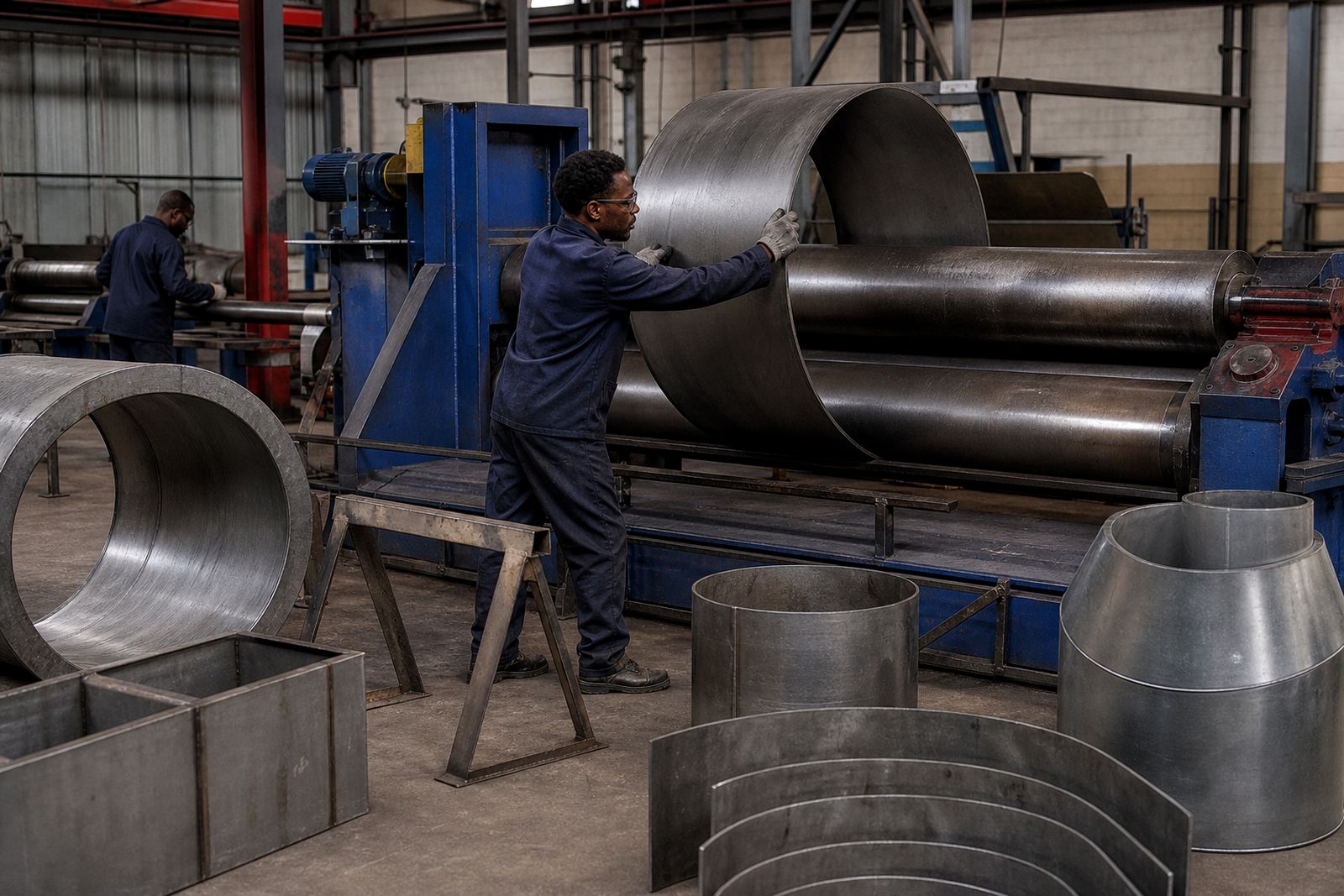
Send a note through our contact form with your drawing or sketch, the material and thickness, the sizes and quantities, and how the steel will reach our Sunnyrock workshop, and we will come back with questions or a written quote.
Open the contact form