Checking a rolled part
When you collect rolled work, a few simple checks can confirm that the part matches what you expected. These are the usual points customers look at on rolled sheet, plate and sections.
Start with the shape you expected
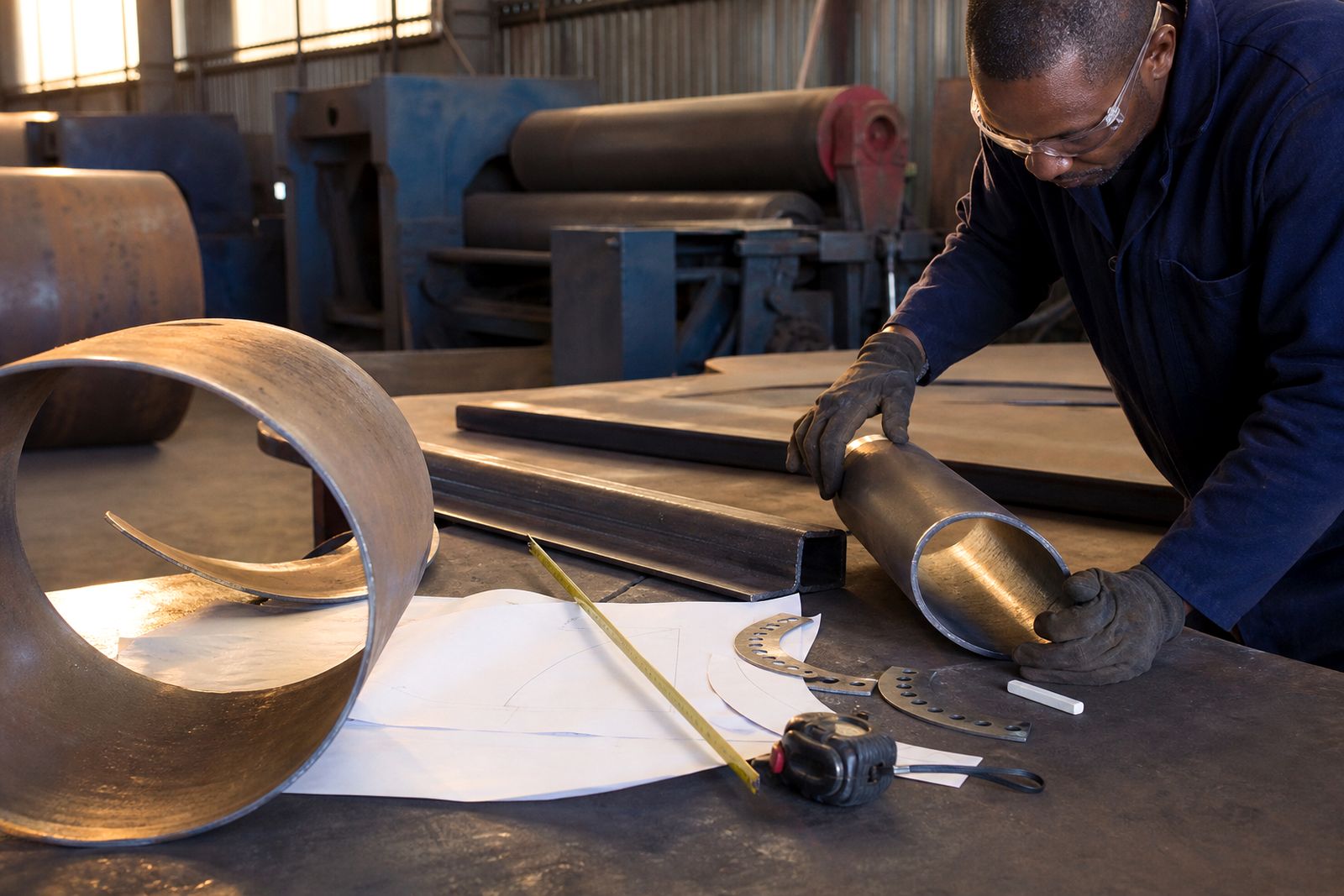
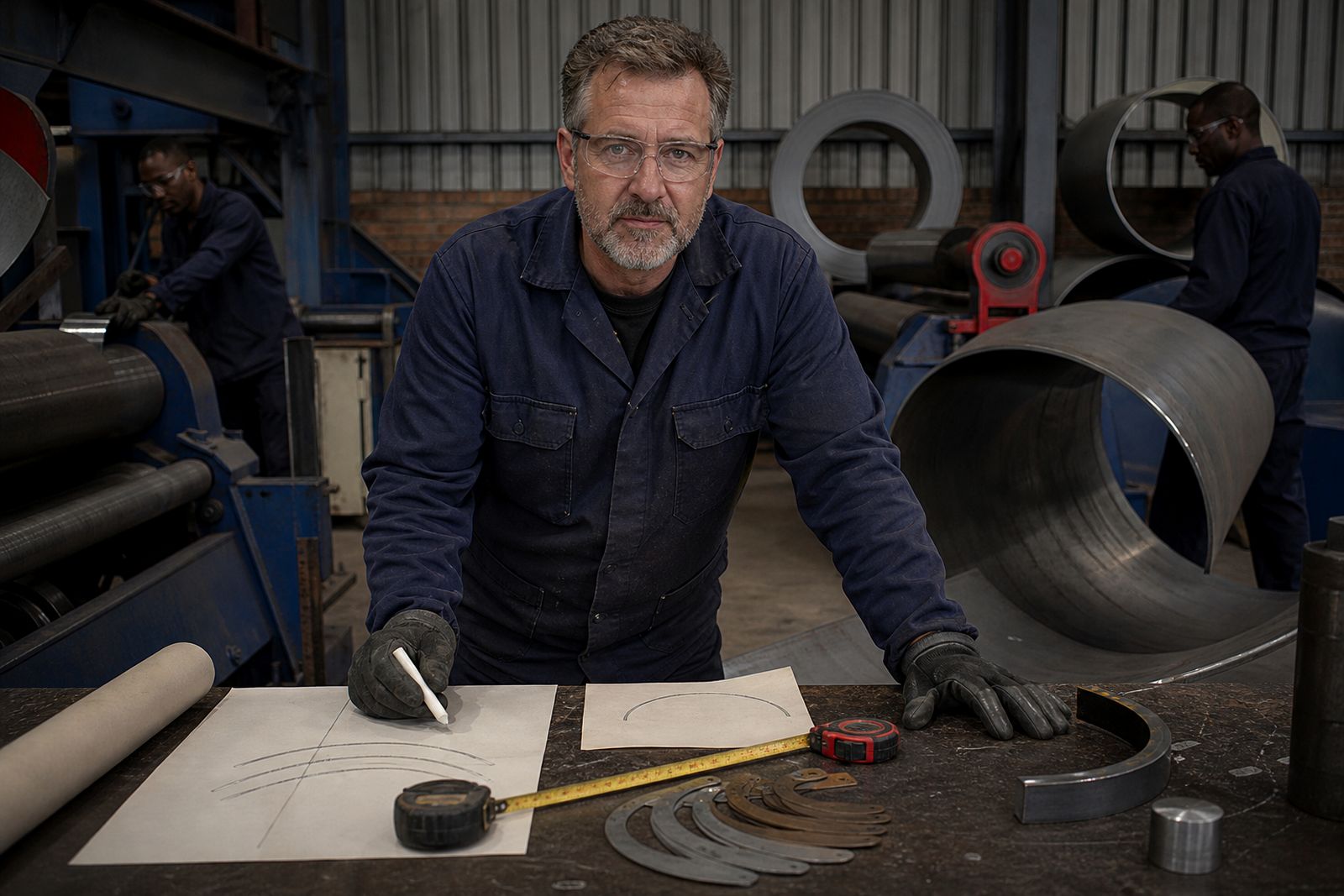
The first check is simply to compare the finished part with the shape you asked for. If you supplied a drawing, sketch, template or sample through the contact form, bring a copy with you when you collect. That gives you a direct reference for the rolled form, especially on repeat work or parts that need to match existing fabrication.
Look at the part as a whole before focusing on measurements. A rolled shell, ring or curved section should look even through the curve, without obvious flats where a smooth sweep was expected. For work going into tanks and vessels, ducting or structural curves, that overall visual check often shows straight away whether the part is in the right range.
Check radius and diameter sensibly
For rolled sheet and plate, customers often check the curve with a radius template if they have one. Hold the template against the rolled surface and compare it in more than one position along the part. A useful check is to look for consistent contact rather than relying on one small spot.
If the part is a full ring or a near complete circle, measure the diameter across the opening in more than one direction. This helps you confirm that the size is where you need it and gives you a quick indication of roundness as well. If your job depends on a particular finished diameter, bring the same reference dimensions you used when sending the work through. If you are preparing new work, drawing a part for rolling helps you set that out clearly.
Look for ovality on circular work
A circular rolled part should not only be the right size, it should also be reasonably even across its shape. The normal way to check this is to measure across the part at several points, then compare those readings. If one direction is noticeably different from another, you are seeing ovality.
This matters on parts that must line up with mating components, covers, flanges or existing repair work. A shell can look close to round at first glance but still vary enough to affect fit-up later in the workshop. Taking a few measurements around the part while it is still at collection stage is a simple way to avoid surprises back at your bench.
For rolled plate and sheet used in repairs, it can also help to place the part against a known reference, such as an existing shell or template, where one is available. That gives you a practical check alongside the measured one.
Check twist and orientation on sections
On rolled sections such as angle, flat bar, channel, tube and beams, shape is not only about the curve. Twist matters too. A section can have the right radius but still rotate through its length, which can affect how it sits in a fabrication.
A simple shop check is to place the section so you can compare the orientation of both ends. Flanges, legs or faces that are meant to stay in line should still present evenly. On channel or angle, check whether the profile remains square to your expected position through the rolled length. On tube and beam work, sighting along the part can also show whether the section has stayed true through the curve.
If orientation is important for your assembly, compare the finished section with your drawing or sample. For related background on how material choice can affect the final rolled form, see material, thickness and springback.
Make sure seams and matching parts line up
Some rolled parts need to meet another part cleanly, or return to a seam position that suits later fabrication. On cylinders and rings, check that the ends come together as expected. On paired parts, compare them side by side so you can see whether the curves match and whether one starts or finishes differently from the other.
Useful collection checks include:
- End alignment, do the ends meet where you expect them to meet.
- Seam position, does the join line sit where your fabrication needs it.
- Pair matching, do left and right parts, or repeated parts, follow the same curve.
- Reference marks, if you supplied marks or orientation notes, are they still easy to identify.
If anything needs clarifying, bring it up while the job is still in the workshop. New enquiries can be sent through the contact form with drawings, templates or sketches and material details, and Brockett replies with questions or a written quote.
Tell us about the part you need rolled
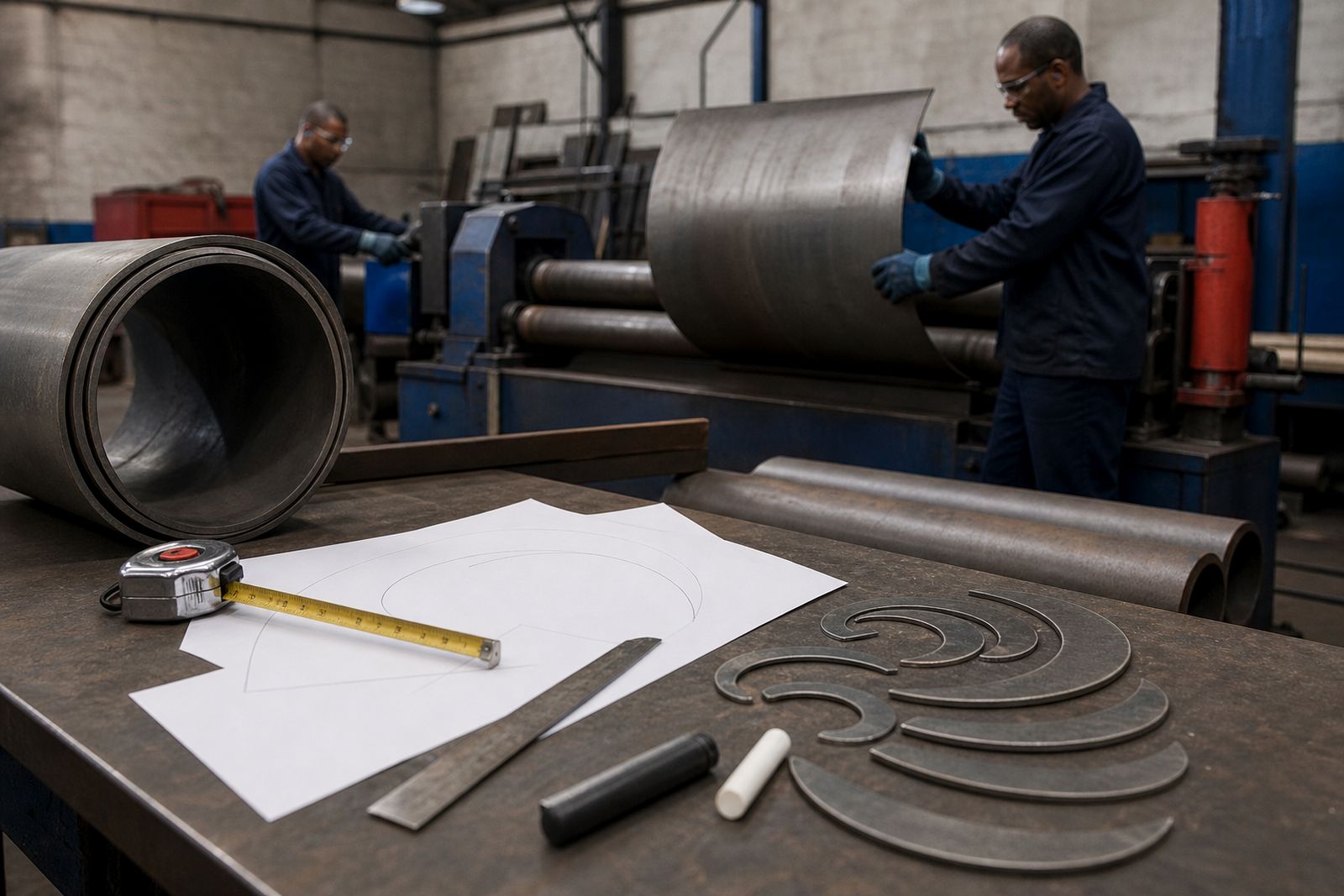
Send a note through our contact form with your drawing or sketch, the material and thickness, the sizes and quantities, and how the steel will reach our Sunnyrock workshop, and we will come back with questions or a written quote.
Open the contact form