Cone and segment rolling
Brockett rolls cone sections, reducers and transition pieces from flat patterns for fabrication and repair work. Send your drawing, sketch or template through the contact form for a written quote.
Cone rolling from your flat pattern
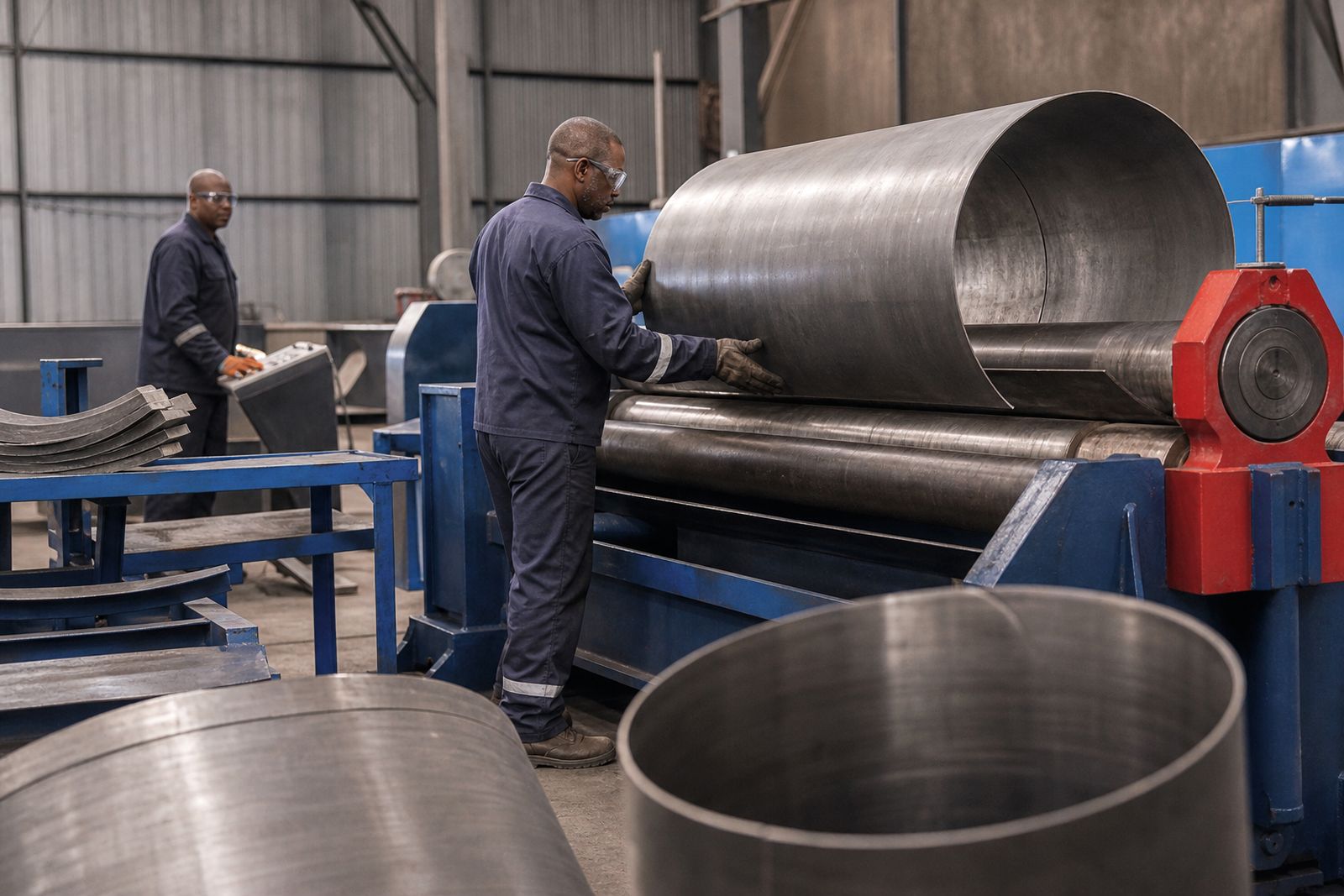
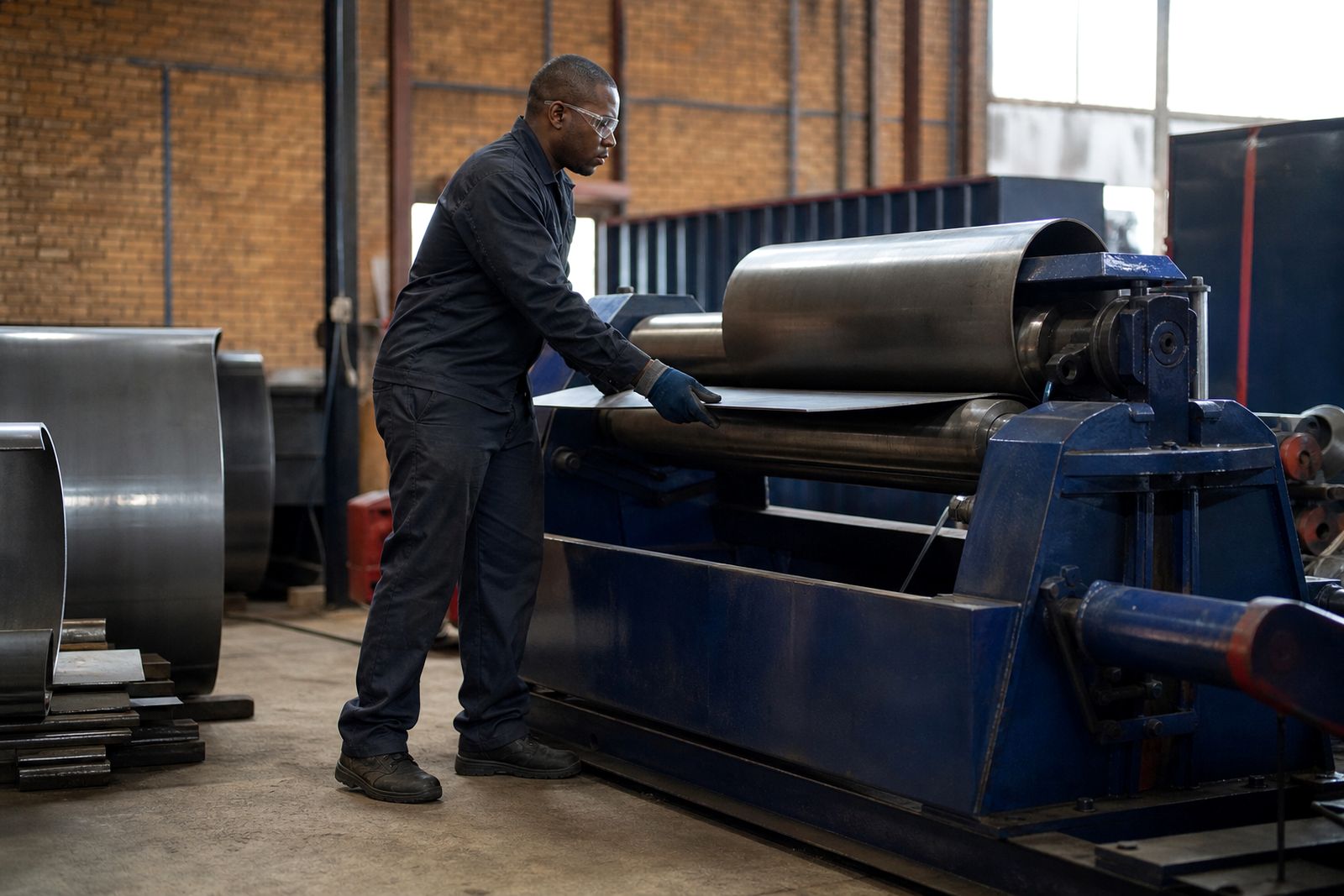
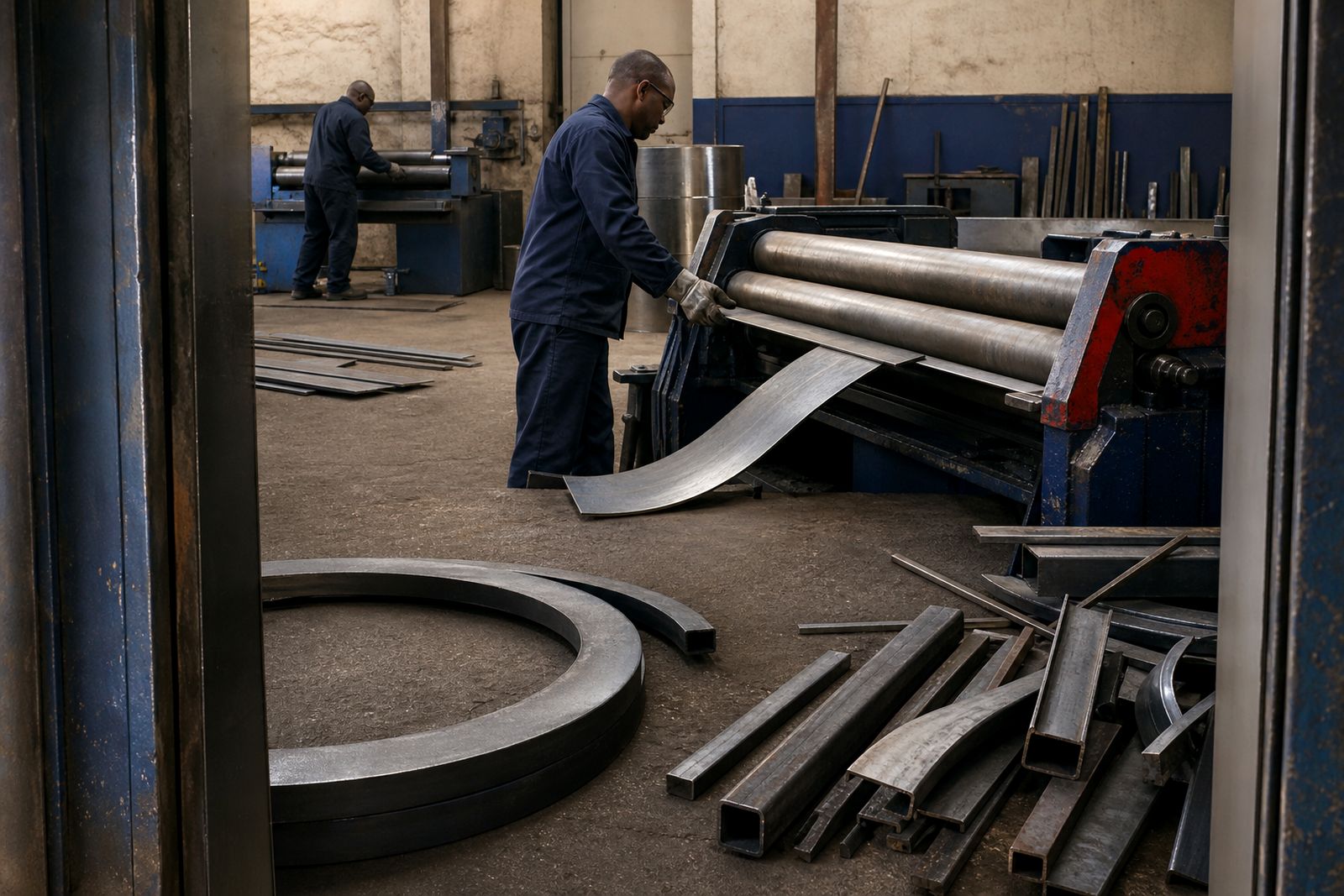
Cone and segment rolling is used where a round, tapered or changing shape is needed from steel sheet or plate. Typical parts include cone sections for hoppers, reducers for duct runs, and transition pieces that join one opening size or shape to another.
Brockett rolls and forms these parts in its workshop at 2 Makro Place, Sunnyrock 1401, Germiston, from customer supplied drawings, sketches, templates or samples. The work suits builders, workshops, fabricators and manufacturers who need rolled components prepared to their fabrication requirements.
Typical parts and trade uses
These rolled parts are commonly used where material flow, air movement or a tapered connection is required. The shape can be a full cone, a cone segment, a reducer, or a transition section developed from a flat pattern.
- Hopper cones and partial hopper sections
- Chute transitions and tapered liners
- Duct reducers and branch transitions
- Round to square, square to rectangular, or offset transition pieces
- Replacement segments for repair work
If your job includes other curved components, you can also see plate rolling, sheet rolling and section rolling.
What to include with an enquiry
The clearer the drawing, the easier it is to quote and roll the part correctly. Send your enquiry through the contact form with the drawing or sketch, plus the material details. Brockett will reply with any questions needed to confirm the job, or with a written quote.
Helpful drawing details include the large end size, small end size, overall height or slant height, material thickness, and whether the part is a full cone or a segment. For transition pieces, include the size and shape of each end, the orientation, and any offsets. If you have a developed flat pattern, that is useful to send. More guidance is available in drawing a part for rolling and material and thickness.
Templates, samples and matching existing parts
For repair work, customers often need a new cone section or transition piece to match an existing worn or damaged component. If the original part is available, a sample or physical template can help confirm the rolled shape and the fit within the fabrication.
Where no formal drawing exists, a clear sketch with marked dimensions is often enough to start the enquiry. Include any important notes about seam position, handed orientation, mating edges or whether the part must match existing ducting, hopper work or related steel components. You can also read more about repair-related work at repairs.
Workshop process and collection
After the enquiry details arrive through the contact form, Brockett reviews the information and sends questions if anything needs to be clarified. Once the details are sufficient, the quote is issued in writing.
Work is done in Brockett's own workshop in Sunnyrock, Germiston. Customers drop material off and collect finished parts, or arrange their own transport or courier. If you are preparing work for tanks, ducting or similar fabrication, see related applications for tanks and vessels and ducting.
What our Steel Rolling customers say
Verified Google reviews
Questions we get asked
What must I send for a cone rolling quote?
Send your enquiry through the contact form with a drawing, sketch, template or sample, plus the material details. For cone work, include the end sizes, height or slant height, thickness, and whether it is a full cone, a segment, or a reducer so the shape can be understood clearly.
Can Brockett roll a round to square or square to rectangular transition?
Yes, Brockett rolls and forms transition pieces from customer supplied details for fabrication and repair work. Send the size and shape of both ends, any offset, the overall height, material thickness, and a sketch that shows the orientation of the transition.
Do I need to provide the flat pattern?
A flat pattern is helpful if you already have one, but it is not the only way to enquire. A clear drawing or sketch with the key dimensions and material details can also be sent through the contact form. Brockett will reply if any further information is needed.
Can you match an existing hopper or duct section for a repair?
Yes, repair work can be quoted from a sample, template or marked up sketch where available. If the new part must match existing equipment, include the important dimensions, shape, thickness and any notes about edges or orientation so the formed part suits the fabrication.
How do I get the material and finished parts to you?
Customers drop material off at Brockett's workshop and head office at 2 Makro Place, Sunnyrock 1401, Germiston, and collect the finished parts when ready. Customers can also arrange their own transport or courier for both delivery and collection.
Also worth a look
Tell us about the part you need rolled
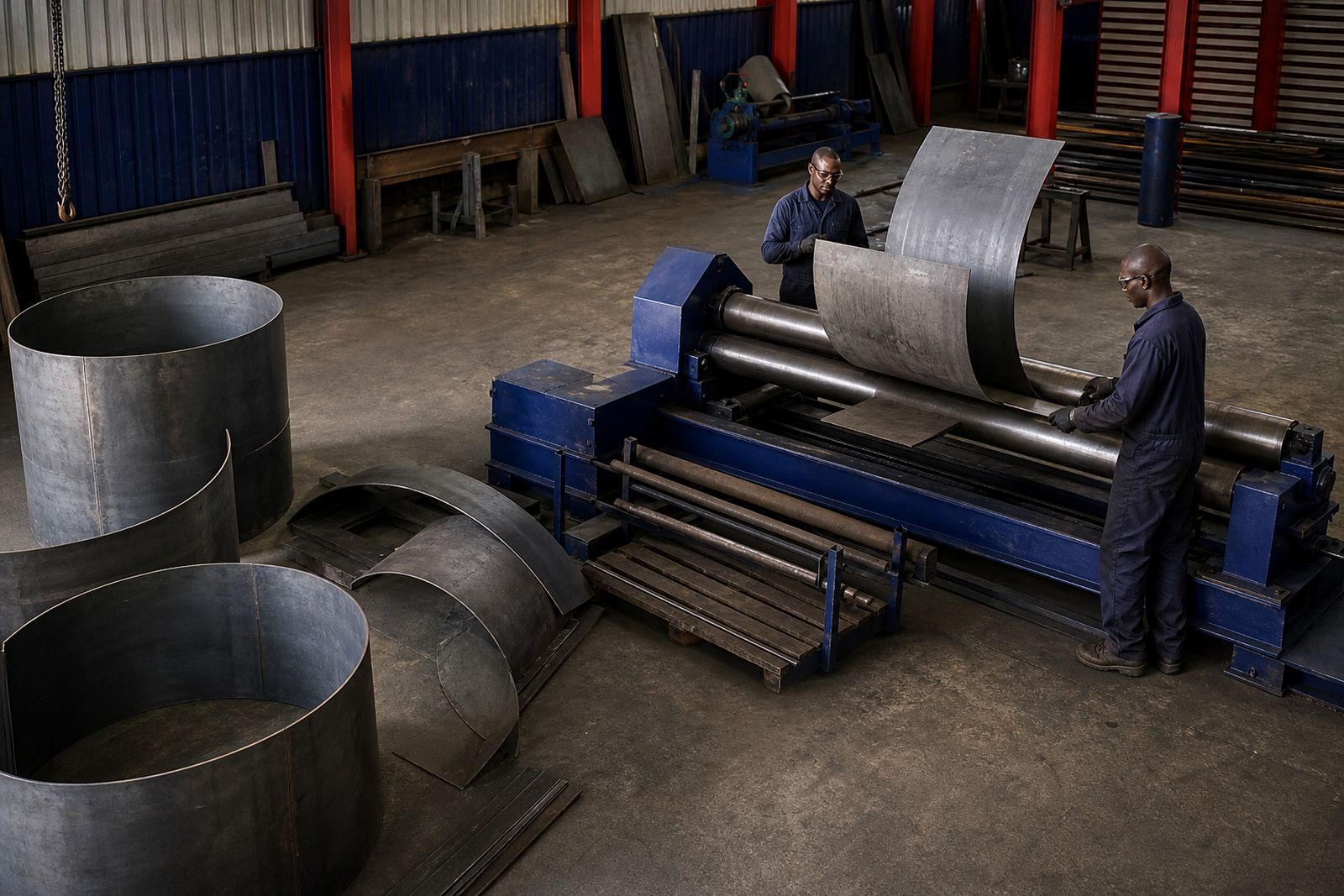
Send a note through our contact form with your drawing or sketch, the material and thickness, the sizes and quantities, and how the steel will reach our Sunnyrock workshop, and we will come back with questions or a written quote.
Open the contact form